The Four Pillars of Well-Being
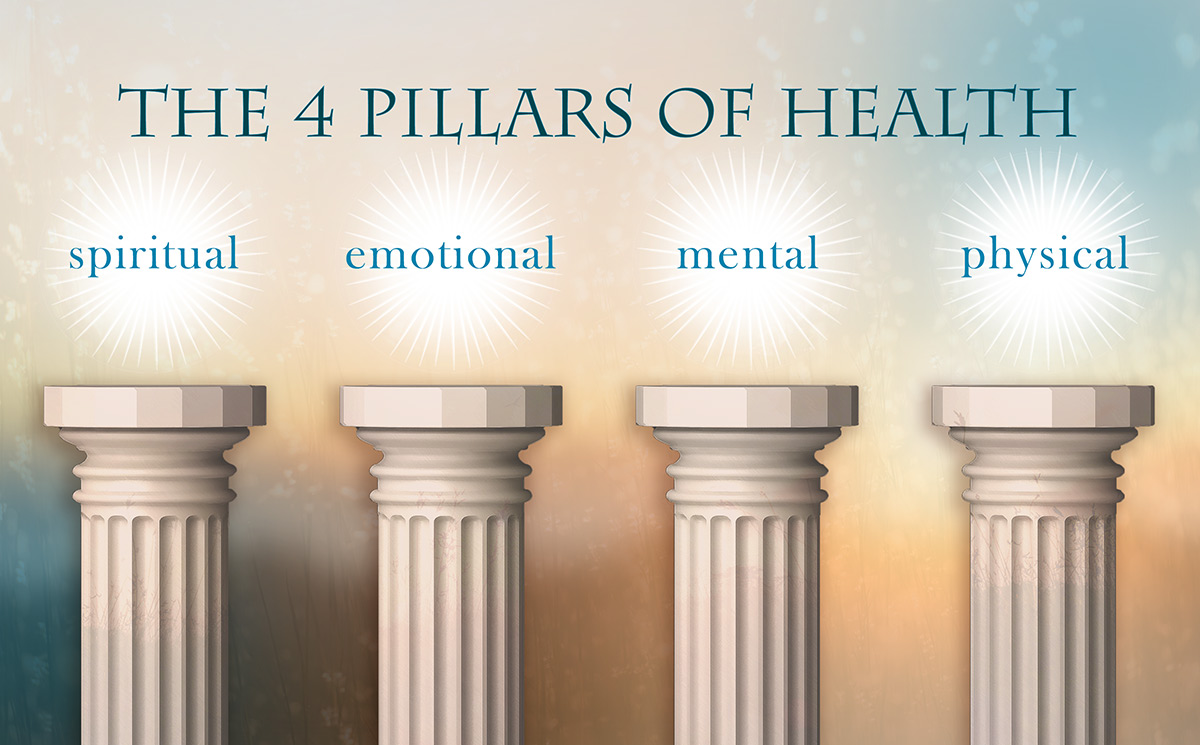
The concept of the Four Pillars — Physical, Mental, Spiritual, and Emotional — represents the core dimensions of personal development and holistic health. Each pillar supports a different aspect of your overall well-being, and together they create a balanced, integrated life.
1. Physical Pillar
Definition
The physical pillar relates to the health and vitality of the body.
Key Components
-
Nutrition
-
Exercise and movement
-
Sleep and recovery
-
Physical fitness and preventative care
Why It Matters
Your body is the foundation that carries every other aspect of your life. When properly nourished and rested, it provides energy, resilience, and strength. Consistent physical care improves immune function, enhances mood, and reduces the risk of illness. A strong body supports a strong life.
2. Mental Pillar
Definition
The mental pillar focuses on cognitive clarity and intellectual growth.
Key Components
-
Learning and skill development
-
Problem-solving
-
Critical and creative thinking
-
Mental stimulation
Why It Matters
Mental well-being strengthens focus, adaptability, and resilience. Challenging the mind keeps it sharp and engaged. Growth in this pillar enhances decision-making, creativity, and the ability to navigate complexity with confidence.
3. Spiritual Pillar
Definition
The spiritual pillar centers on meaning, purpose, and connection.
Key Components
-
Reflection and mindfulness
-
Meditation or contemplative practices
-
Alignment with personal values
-
Connection to something greater than oneself
Why It Matters
Spiritual well-being fosters inner peace and clarity of purpose. It does not necessarily imply religion; rather, it reflects alignment with your values and a deeper understanding of life. This pillar anchors identity and direction.
4. Emotional Pillar
Definition
The emotional pillar involves awareness, expression, and regulation of emotions.
Key Components
-
Self-awareness
-
Emotional regulation
-
Empathy
-
Healthy communication
Why It Matters
Emotional intelligence shapes relationships and resilience. Understanding and managing emotions allows you to respond rather than react. This pillar strengthens connection, reduces stress, and enhances interpersonal harmony.
The Power of Balance
True well-being emerges from balance across all four pillars. Neglecting one area can weaken the others, while strengthening one often elevates the rest.
When physical vitality, mental clarity, spiritual alignment, and emotional intelligence work together, they create a stable and empowered foundation for personal growth.
Holistic development is not about perfection — it is about intentional attention to each dimension of your life.